Fidel Castro arrives MATS Terminal, Washington, D.C., April 15, 1959. Public Domain, via Wikimedia Commons.

The Trump Administration has fully implemented Title III of the Helms-Burton Act, which allows suits to proceed in U.S. courts against companies that do business in Cuba and profit from the use of property expropriated after the 1959 Communist Revolution.  Earlier this year, I posted the following illustration of how such a suit plays out:

Continue Reading HELMS-BURTON TITLE III EFFECTIVE

Quito, Ecuador. Where Julian Assange is not. Diego Delso via Wikimedia Commons.

Last summer, service of process in a major case was effected via Twitter.  In Twitter Service Hits the Bigtime, I commented that such service was okay under FRCP 4(f)(3) because the more traditional means were foreclosed to the plaintiffs.  Wikileaks was on the hook, in the eyes of the S.D.N.Y.

Continue Reading Tough to get Assange despite arrest

Christchurch College, Oxford.

“Two things I know to be true:  there is no difference between good flan and bad flan, and there is no war in Albania.”

— William H. Macy as “CIA Agent Young” in Wag the Dog

A shameless plug there for one of my favorite movies. Not only was Macy the clueless CIA agent dressed down in Wag by Robert de Niro, but he was also clueless Oldsmobile salesman Jerry Lundegaard in another of my favorite movies, Fargo.  I have yet to see any episodes of Shameless, but any guy who can play clueless so well is… simply brilliant.  You just can’t pull off stupid unless you’re smart.  No, really.

Continue Reading Admissionsgate… if it involved Oxbridge or the Sorbonne

USS Cole, the ship at the heart of the suit. U.S. Navy photo.

Last fall, I posted “FSIA Service… it’s really not that difficult” following several very poorly titled articles describing the Trump Administration’s support of a foreign government’s argument in a sovereign immunity case.  Sudan had asserted that service on its Embassy in Washington was not appropriate under the Foreign Sovereign Immunities Act, and the Department of Justice weighed in on Sudan’s side.  The outrage from both left and right irked the hell out of me.  But the knee-jerk, non-lawyer reaction from the left– my own people, for crying out loud– really set my teeth on edge.  Yesterday, logic won.

Continue Reading SCOTUS solidifies FSIA service logic

Credit Suisse, one of the biggest banks in Zurich.  Which is saying something.  Dietmar Rabich / Wikimedia Commons / “Zürich (CH), Paradeplatz — 2011 — 1381” / CC BY-SA 4.0

I’ve seen a huge spike lately in the number of divorce attorneys calling about serving subpoenas on offshore banks.  The routine story: Spouse A (usually the wife, but not always) has learned that Spouse B (usually the husband, but not always) has tucked a few thousand dollars into some offshore account, usually in one of several countries that are famous for stringent banking secrecy laws.  Switzerland, the Cayman Islands, and the Channel Islands are those that come to mind, but protecting depositors’ privacy is fairly universal in the industrialized world.  As such, the calls haven’t been limited to the famous banking havens.

Continue Reading Divorce, Money Hidden Offshore, and The Hague

1854 Grimms’ German Dictionary, via Wikimedia Commons

Here we go again.  I’ve written before in this space that, yes, counsel, you do have to translate that thing.

But resistance keeps coming up in the legal community:  “oh, come on, the defendant lived in Chicago* for twelve years– the guy speaks English!”

Perhaps, but he lives in Germany now, and you’re serving him there.  Germany requires translation into German, without regard to the defendant’s competence in English.

(Yet they continue to push.)

Continue Reading Translation: it’s not about the defendant!

Waterfront Dr, Road Town, Tortola. Kevin Stroup via Wikimedia Commons.

We aren’t building rockets here.  But we are building a ship of sorts, and a leaky hull means the cruise ship might not get you to that cabana sheltered rum drink you’ve been craving.  Serving process in the British Virgin Islands is subject to the strictures of the Hague Service Convention, regardless of which U.S. venue* is hearing the matter– in exactly the same way as service in England and Wales.

Continue Reading How to Serve Process in the British Virgin Islands (updated 2025)

Yeah, cruise ships dock there. A lot. [Prince George Wharf, Nassau Harbor. TampAGS, for AGS Media, via Wikimedia Commons.]
We aren’t building rockets here.  But we are building a ship of sorts, and a leaky hull means the cruise ship might not get you to that cabana sheltered rum drink you’ve been craving.  Serving process in the Bahamas is subject to the strictures of the Hague Service Convention, regardless of which venue is hearing the matter.  No longer an overseas territory of the United Kingdom, the Bahamas adopted an independent constitution in 1968,* and fully implemented the Service Convention thirty years later.  Not even 200 miles off south Florida, the islands get a whole bunch of tourists– and commerce– from the U.S. & Canada, and lawsuits are a natural result.

Continue Reading How to Serve Process in The Bahamas (updated 2025)

Cannon Point, Diego Garcia. Blaine Steinert, via Wikimedia Commons.

Three years before Mauritius gained its independence from the United Kingdom (ie: 1965 and 1968), a chain of tiny islands in the Indian Ocean were separated from the island colony, and still remain under British control five decades later.  On Monday, the International Court of Justice Issued an advisory opinion holding that the UK had illegally separated the archipelago from Mauritius, raising a slew of questions as to the strategic islands’ future.    Continue Reading Chagos Archipelago: Huge Ruling Issued by the ICJ

Medallion – Signing of The Last WIll and Testament of The Springfield Presbytery @ Cane Ridge Meeting House, Paris, Kentucky. Chris Light, via Wikimedia Commons.

It happens all the time.

I’ll give a lecture or mention what I do at a bar association event, and the colleague I just met will express appreciation for what I do, tell me it’s a really neat niche, and then try to convince himself that our practice areas don’t overlap.  I’m here to tell you that, yes, they do.  But it’s tough to convince highly experienced professionals that something outside their wheelhouse might be a challenge in the not-too-distant future.

The conversation usually goes something like this:

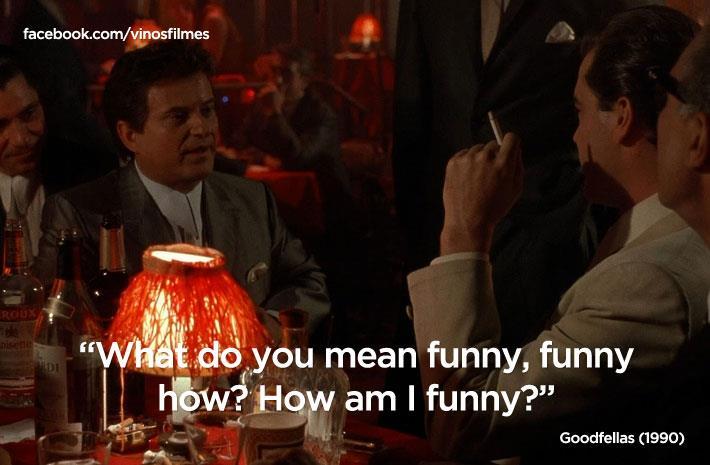
Sorry, Aaron.  I’m an estate planning lawyer. I’ll never need to serve anybody in a foreign country.  But thanks for doing that CLE.  You’re a funny guy.  (Funny how?  I’m a clown?  I amuse you?)  No, I mean I really like how you got that picture of Boromir into your slide deck!

This is Boromir, from the Fellowship of the Ring. It is not Ned Stark.

Wait a sec, there, pal.  It’s likely that you’ll eventually have to serve abroad someday.  Ever represent a client who wants to contest the Last Will and Testament of an estranged relative?  (Yes.)  How about if that will that leaves the decedent’s prize collection of Elvis Presley memorabilia to his Cousin Seamus in Dublin?  Think someone might have to serve ol’ Seamus?  (Hmmmm.)  Bear with me here…

It doesn’t matter what court is handling the case– estate litigation is still litigation.  And if you need to hale into court an individual heir (or devisee or… whatever the state-specific term is for cousin Seamus) who is outside the United States, you’re going to have to know how to do it the right way.

If you have any sort of adverse party abroad– or even someone whose interest align with your client’s, but who must be served certain notice or pleadings– strict rules must be observed.

Estate litigation is still litigation.

So how do you do that?

It bears repeating.  The Hague Service Convention controls how all this gets done wherever it applies.  It’s a treaty, to which the United States is a party, and which entered into force right about the time my mom graduated from high school.  Thanks to the Supremacy Clause, its strictures trump lesser laws.  A gentle reminder:

This Constitution, and the Laws of the United States which shall be made in Pursuance thereof; and all Treaties made, or which shall be made, under the Authority of the United States, shall be the supreme Law of the Land; and the Judges in every State shall be bound thereby, any Thing in the Constitution or Laws of any State to the Contrary notwithstanding.  (Art. VI-2)

(Emphasis mine.)

Serving in Ireland is pretty straightforward.  We prep the documents for service under Article 10(b), send them to my Irish solicitor, and he takes it from there.

The Ha’Penny Bridge, across the River Liffey in Dublin. Odds are, Cousin Seamus walked across this to see Elvis back in the day.