I say all the time that we’re not building rockets here.  But we are building a JetSki of sorts, and a sputtering JetSki means you’re not going to finish your jungle tour in time to make it back for the foam party at Señor Frog’s.  Serving process in Mexico is subject to the strictures of the Hague Service Convention, regardless of which U.S. or Canadian venue is hearing the matter.

You’ve got three ways to go:

  1. Tap us on the shoulder for bespoke attention—and probably some amusing commentary to boot (see the upper right if you’re on a desktop, or way down below if you’re on a phone/tablet),
  2. Cruise over to the Hague Envoy platform at USM94.com to automate the completion of your forms in perhaps twenty minutes or so, or
  3. If you’re feeling froggy & would like to handle the whole thing yourself, keep reading.  This lays out the framework you’ll need.

Some background is in order, if you’re so inclined, before we cut to the chase.

Now, for the chase scene.  And now that you’ve had your James Bond fix, here’s how service of process is done in Mexico:

Article 5 Service

  • Translate the documents. Mexico’s declaration to Article 5(3) requires it and, although the defendant may speak flawless English, omitting translated documents will prompt the Central Authority to reject your request.*
  • Fill out a USM-94. Be very careful about ensuring that it is complete and concise, and make sure that it is signed by a court official or an attorney.  If it is not, make sure that the person signing is commissioned by the court.
  • Send to the Central Authority.  Although the treaty only requires submission of two copies, Mexico insists on triplicate submissions.  (You can be happy or you can be right, so I don’t make a big deal of it!)
  • Sit tight. It may take a while—likely 18 months, perhaps two years or even more, from submission to return of proof.  The judge is just going to have to accept that fact, because there is no appropriate alternative.  To be sure, that time frame is not fatal to your case– 4(m) is your friend.

Article 10 alternative methods

  • Forget them, because Mexico objects to them all. Article 5 is it.  Acabado, abogado.

Seriously—that’s all there is to it in Mexico, but don’t get excited.  Sure, the method is straightforward and simple, but actually making it happen is anything but smooth.  The real problem with service in Mexico is that it takes an interminably long time, and in many cases, local authorities are decidedly less than motivated to act against large local entities, so service on the local factory boss may not happen at all.

Mexico’s declarations and Central Authority information can be found here.


Bonus practice tip #1: if the idea is strategically sound, ask the defendant to waive service.  Note that I didn’t say accept— I said waiveThere’s a very important difference.

Bonus practice tip #2: if you’re defense counsel, always question the validity of service effected on your overseas client.  The plaintiff may not have done it correctly.


* The Mexican Central Authority hands service requests off to courts in the communities where defendants are located, and the judges execute requests according to local practice.  Until very recently, those judges enforced a rule that required all translations submitted to their courts be performed by court-certified perito translators.  Such translators are few and far between—a very tight guild monopoly—driving up the cost of translation despite the position of the Hague Conference that no such requirement was appropriate under the Service Convention.  Apparently, the Central Authority now communicates to judges that lack of a court-certified perito translation is not sufficient grounds for rejecting a request.  This does not mean, however, that the rejection would not be issued anyway, in which case the Central Authority would bounce the request to the judge again… back & forth until an understanding is reached.  All the while, the U.S. lawyer and his/her client sit and wait.


[Author’s Note:  My only visit to Mexico was on a spring break trip to Cancun in the late 1990s… and I was the chaperone.  By that time in my life, foam parties and booze cruises were not my thing, but I did get to climb the pyramid at Chichén Itzá and eat the best fish tacos anywhere in the solar system.  It took a fair amount of begging to get to see real Mexican life, because it cannot be found in the resort areas.]


Watch for it.  Two closely related ideas are going to become a huge deal in the next few weeks/months/years: Dumping (or Anti-Dumping, AD) and Countervailing Duties (CVD).  They go hand-in-hand as a legal specialty* called “AD/CVD”.   So what are they?

Dumping, in a nutshell:  let’s say the Republic of Kansas makes alarm clocks, and it costs them $2.00 to make a single clock.  The Kingdom of Missouri also makes alarm clocks, but production costs are only $1.75 each.   (Nobody else makes alarm clocks anywhere in the world.)  Clocks sell for $2.25 in the marketplace, and Missouri makes a tidy profit.  But Kansas doesn’t like this, so they flood the market with alarm clocks at $1.50 (they “dump” below-cost goods), and the government subsidizes the producers so they don’t lose.

Eventually, the Missouri clockmakers have to shut down, because to sell a clock, they have to lose a quarter on each unit.  That ain’t happening in the Show Me Kingdom.  We’ve got better things to do.

Once the Kansas clockmakers have no competition, though, the price goes to five bucks a unit.**  Missouri, justifiably, wants to lay waste to their western neighbor, so they undertake anti-dumping measures, perhaps by dumping hula hoops into Kansas or prohibiting Kansas imports or… tacking on a countervailing duty.

Countervailing Duties are tariffs (import taxes) charged by an importing country in order to offset subsidies given to producers in the exporting country.  Keeping the Kansas-Missouri clock analogy alive, Missouri assesses a countervailing duty of 75 cents on each Kansas clock, so they still sell for $2.25.  Missouri clockmakers don’t lose their shirts, and Kansas doesn’t take an unfair portion of the market.

CVD’s are purely retaliatory, and they don’t only pop up in dumping cases.

So why is this a thing?  Well, I’ll leave a more thorough description to my friends over at the China Law Blog, and today’s post, China is Getting Ready for a US-China Trade War.  Click on over and read, or the following may not make sense.

[Bear with me here.]  I’m 6’4″ and built like a tuba player.  I’ve been in exactly one fistfight in my life, and it was with a buddy who was justifiably pissed at me.  The reason that number is so low (mark my words here): guys my size don’t fight.  There are only two possible scenarios, and they’re both bad:

  • If the other fellow is smaller, I look like a bully when I beat him, and I look like a weakling when I lose.
  • If the other fellow is my size or bigger, I might beat him soundly, but it’s going to hurt like hell.  Win or lose, I’ll walk away bruised and limping, no question.

My point is this: as attractive as an America First policy might seem, it’s going to hurt, and it’s going to hurt badly.  Agricultural exports would take a major hit in a Sino-American rift.  Here in Kansas City, one of our biggest employers is already bracing for disaster if trade with Mexico is squeezed.  Win or lose, we’ll look like either a bully or a weakling, and we’ll walk away bruised and limping.


* Yeah, yeah.  We’re not supposed to say we “specialize.”  But if you only handle divorces and adoptions and you’re really good at them, you specialize in family law.  If all you do is wills and trusts and you’re really good at them, you specialize in estate planning.  Lawyers specialize.  But ethical rules say we can’t say as much, lest we give potential clients the false impression that we have certain expertise.  This is a concept only a lawyer could come up with… and it all started with that one jerk who did it wrong and made things difficult for the rest of us.

** A real world example of dumping: rare earth metals, which are needed in the manufacture of critical components in electronics, and which make cell phone recycling so lucrative.  Part of my J.D. thesis examined China’s dumping of rare earths into the U.S. market in the 1990s (before China joined the WTO), the end of rare earth mining in the U.S., and the subsequent skyrocketing of their costs.  Today, the industry is making a comeback in the U.S.

[Author’s note:  my first of many visits to the Grand Duchy of Luxembourg was at the age of five or six, with my parents.  In college, I had a chance to visit on my own, and fell in love with the place all over again, concluding that Lux City is Europe’s best-kept secret.  Really a neat corner of the world, and highly sophisticated—especially in the legal and financial industries.]

Serving process in Luxembourg is subject to the strictures of the Hague Service Convention, regardless of which U.S. or Canadian venue is hearing the matter.

You’ve got three ways to go:

  1. Tap us on the shoulder for bespoke attention—and probably some amusing commentary to boot (see the upper right if you’re on a desktop, or way down below if you’re on a phone/tablet),
  2. Cruise over to the Hague Envoy platform at USM94.com to automate the completion of your forms in perhaps twenty minutes or so, or
  3. If you’re feeling froggy & would like to handle the whole thing yourself, keep reading.  This lays out the framework you’ll need.

Some background is in order, if you’re so inclined, before we cut to the chase.

Now, for the chase scene (or more accurately, here’s how it’s done in Luxembourg):

Article 5 Service

  • Translate the documents. Luxembourg’s declaration to Article 5(3) requires it and, although the defendant may speak flawless English, omitting translated documents will prompt the Central Authority to reject your request.  Fortunately, the Authority will accept translations into either French or German, so savings can occasionally be realized by chance.  If a Luxembourg party’s co-defendant is in France, southern Belgium, or western Switzerland, only one translation is necessary.  Likewise with a co-defendant in Germany or eastern Switzerland (although the preferred language is still French).
  • Fill out a USM-94. Be very careful about ensuring that it is complete and concise, and make sure that it is signed by a court official or an attorney.  If it is not, make sure that the person signing is commissioned by the court.
  • Send to the Central Authority.
  • Sit tight. It will likely 2 months from submission to receive proof of service.

Article 10 alternative methods

  • Mail service is technically available, but it’s a bad idea anyway.
  • Luxembourg also allows direct access to a huissier de justice,* the judicial officer who serves process in local actions and Article 5 requests anyway.  In my experience, this isn’t necessary because the Central Authority is relatively quick to begin with.

Pretty straightforward options in this tiny dukedom, but choosing the right one can be tricky.  Luxembourg’s declarations and Central Authority information can be found here.

Bonus practice tip… if you’re defense counsel, always question the validity of service effected on your overseas client.  The plaintiff may not have done it correctly.


* The huissier is a specialized professional in the civil law system.  A qualified attorney, whose practice is limited to procedural matters on behalf of the court, the huissier not only serves process, but is also tasked with executing judgments.  A rough analog in common law systems:  a combination between a bailiff and a sheriff, but with the same level of training as a practicing attorney.  The huissier’s counterpart in Dutch-speaking jurisidctions: the gerechtsdeurwaarder.  In German-speaking areas: the deurwaarder (although, to be sure, this won’t help much, as Germany, Switzerland, and Austria all prohibit access to judicial officers for service requests).

[Author’s Note: my family & I spent three years in Belgium when I was a young boy.  It was the launchpad for my career as an international lawyer, even though it took some thirty more years to develop.  Quite logically, this tiny kingdom holds a very special place in my heart.]

Serving process in Belgium is subject to the strictures of the Hague Service Convention, regardless of which U.S. or Canadian venue is hearing the matter.

You’ve got three ways to go:

  1. Tap us on the shoulder for bespoke attention—and probably some amusing commentary to boot (see the upper right if you’re on a desktop, or way down below if you’re on a phone/tablet),
  2. Cruise over to the Hague Envoy platform at USM94.com to automate the completion of your forms in perhaps twenty minutes or so, or
  3. If you’re feeling froggy & would like to handle the whole thing yourself, keep reading.  This lays out the framework you’ll need.

Some background is in order, if you’re so inclined, before we cut to the chase.

Now, for the chase scene.  Here’s how it’s done in Belgium:

Article 5 Service

  • Translate the documents. Belgium’s declaration to Article 5(3) used to allow the Central Authority to accept untranslated documents.  No longer.  It’s now a requirement (updated 2020).  But that isn’t the end of the analysis—depending on the defendant’s location, different languages are necessary.*
  • Fill out a USM-94. Be very careful about ensuring that it is complete and concise, and make sure that it is signed by a court official or an attorney.  If it is not, make sure that the person signing is commissioned by the court.
  • Send to the Central Authority, who will then instruct a huissier de justice (in the francophone south) or a gerechtsdeurwaarder (in the Flemish/Dutch-speaking north) to serve.
  • Sit tight. It may take a while—perhaps 4 months from submission to return of proof, depending on the defendant’s locality. 

Article 10 alternative methods

  • Mail service is available, depending on where you are, but it’s a bad idea anyway. If you do select this route, pay particular attention to the venue court’s rules about how mail service is initiated—in federal cases, adhere strictly to FRCP 4(f)(2)(C)(ii).
  • Belgium also allows direct access to a huissier de justice or gerechtsdeurwaarder,** the judicial officer who serves process in local actions and Article 5 requests. This method avoids having to wait for processing by the Central Authority, often cutting wait time by a couple of months, but finding a huissier or gerechtsdeurwaarder without speaking French or Flemish (respectively) can be a challenge.

Pretty straightforward options in this tiny kingdom (which is my favorite country on the continent, and has been since I was a young kid).  Belgium’s declarations and Central Authority information can be found here.

Bonus practice tip… if you’re defense counsel, always question the validity of service effected on your overseas client.  The plaintiff may not have done it correctly.


* In the north, translate into Dutch or, even more preferable, Flemish (a Dutch dialect).  In the south—including the city of Brussels—translate into French.  And in the extreme east, a few communities still use German as the local language.  Google the name of the locality to find out which language is preferred.  A handy, cost-saving practice tip:  if a Belgian party has co-defendants in France, Switzerland, Luxembourg, or the Netherlands, you might be able to double-dip your translations.

** The bailiff, for lack of a better term, is a specialized professional in the civil law system.  A qualified attorney, whose practice is limited to procedural matters on behalf of the court, the bailiff not only serves process, but is also tasked with executing judgments.  A rough analog in common law systems:  really a combination hybrid of our bailiffs and sheriffs, but with the same level of training as a practicing attorney.  In French-speaking jurisdictions, s/he is called a huissier de justice.  In Dutch-speaking jurisdictions, a gerechtsdeurwaarder,  and in German-speaking areas, a deurwaarder.   (Although, to be sure, this won’t help much in Germany, Switzerland, or Austria, as those countries all prohibit access to judicial officers for service requests).

It happens all the time.  I’ll give a lecture or mention what I do at a bar association event, and the colleague I just met will express appreciation for what I do, tell me it’s a really neat niche, and then try to convince himself that our practice areas don’t overlap.  I’m here to tell you that, yes, they do.  The conversation usually goes something like this:

Sorry, Aaron.  I handle product liability litigation, not immigration.  But thanks for doing that CLE.  You’re a funny guy.  (Funny how?  I’m a clown?  I amuse you?)  No, I mean I really like how you got that picture of Ned Stark into your slide deck!

This is Boromir. It is not Ned Stark.

Wait a sec, there, pal.  First of all… immigration?  You’re kidding, right?  You did just sit through my lecture on international law, right?  Those are not the same concepts.  [He’s not kidding, sadly.*]

Second of all (setting my incredulity aside), let’s say you do only handle exploding cell phones, no visa applications ever.  What if the phone didn’t spring from the gigantic brain of Steve Jobs?  What if it’s a Samsung?  Or an LG?

“Oh, easy.  I’ll just sue their U.S. subsidiary.”

Yeah, good luck with that, pal.  The U.S. subsidiary isn’t the only bad guy in your exploding phone case.  What about the Korean parent company that designed the thing?  What about the Chinese manufacturer of the battery that can’t seem to do anything but spontaneously combust?  Yes, you’re going to have to sue them, too.

“No worries.  I can serve Samsung via the sub.”  [This fellow obviously failed to grasp that whole “corporate veil” thing in BusOrg class.]

In short, no, you can’t serve the subsidiary, unless you and that subsidiary are in Illinois, where they have a statute allowing such a thing.

The type of product doesn’t matter.  Tainted cat food from China?  Bad medications from Israel?  How about an exploding pop bottle** from Mexico?

Same analysis.  Where is the manufacturer?  Where is the parent?  Where is the real bad guy?

If the defendant is located in another country, you have to observe that other country’s law—and that law is usually spelled out for you in declarations to the Hague Service Convention.

If you don’t get the foreign defendant served properly…

THIS is Ned Stark.
This is Ned Stark, and he approved this message.


* A huge segment of the practicing bar thinks that international law is immigration law, and immigration law is international law.  My local bar association even conflates the two ideas in its committee structure, which is so baffling that both the international lawyers and the immigration lawyers in town have given up trying to convince everybody else.

** In the midwest, a carbonated soft drink is called pop.  We do not call it soda.  Soda is a powder found in an orange box, used to keep the fridge from stinking.  We also don’t call it Coke, like y’all do in the south, because that’s too specific a word, and it’s trademarked to a once-great beverage.  We call it pop because, in the early days of the concept, bottles exploded regularly and spawned an entire industry called “product liability litigation.”


Few things in transnational litigation are as vexing or as unnecessarily frightful as the Letter Rogatory.  Honestly, they’re not that complicated—they just have a few necessary elements that many practitioners miss, and because they’re signed by the judge, we worry.  A lot.  Perhaps this will shed some light…

What is it?

Black’s Law Dictionary (7th Ed.) defines a “letter of request” (same animal) as “a document issued by one court to a foreign court, requesting that the foreign court (1) take evidence from a specific person within the foreign jurisdiction or serve process on an individual or corporation within the foreign jurisdiction and (2) return the testimony or proof of service for use in a pending case.”

Put another way, it’s just a note from one judge to another, asking for a little help:

Dear Unknown Judge in Country XYZ:

 I’m a judge, too, y’see, and I’ve got this case in my court that can’t proceed unless I get some help.  Here’s what’s going on…  (details)

 Now that I’ve spelled out the gist of the case, I’d really appreciate it if you could see your way clear to sending out one of your guys to (serve process/compel this witness to submit to examination/compel production of evidence…).  Pretty please.  You’re a good fellow and, if you ever have occasion to send me one of these requests, you can bet I’ll make it happen for you.  And if you’re ever in Cleveland, I’ll buy you a beer.

Oh yeah, the party that’s asking me to ask you for the favor?  Yeah, he’s gonna cover all of your expenses, so go nuts, Scooter.    Much obliged.

 Your new best pal,
U.S. judge

I’m not exaggerating.  That’s really the tenor of the thing, albeit illustrated like a note from a 12 year-old to his canoeing buddy from summer camp.  It’s just a judge here asking a judge there for a hand.  Nothing more, nothing less.  The biggest drawback: there is not a single legal doctrine that compels the foreign* judge to execute the letter (grant the favor) except the doctrine of comity.  Nothing.

As such, if you get a grumpy judge on the other end (no, we never have those), you could have a problem.  So be gentle.  And just a tad obsequious.

Judge Haller has zero tolerance for your crap.
No, we never have grumpy judges here in ‘Murica.

What’s it used for?

A couple of big issues:  (1) evidence taking, and (2) service of process in countries that aren’t members of the Hague Service Convention.

What are the hurdles?

Well, for starters, the manner in which it’s conveyed.  Letters Rogatory are usually sent through diplomatic channels, which means it takes a while just to arrive in the foreign country, and it also means you have to pony up $2,275 to the State Department for the favor of sending it abroad in the diplomatic pouch.

Some exceptions to the “send it through State” rule:

  • The Hague Service Convention renders Letters Rogatory completely unnecessary, so don’t sweat using one for Service of Process in much of the world.
  • The Hague Evidence Convention removes the State Department from the equation, and allows submission directly to a Central Authority.  It’s called a Hague Letter of Request, but substantively, it’s the same thing.
  • The InterAmerican Convention on Letters Rogatory and Additional Protocol reduce the format to some pre-printed forms and allow for submission directly to a Central Authority, whether for service or evidence compulsion.
  • Many Canadian courts will accept them directly for evidence requests.  That is, they’re still Letters Rogatory, but without the hassle and cost of going through State.  (Note that Canada is not party to the Evidence Convention.)

Another big hurdle is making the forum court judge understand why this this is necessary in the first place.  Keep in mind, this is the fellow whose signature is going on the thing.  I know some very fine judges, and several of them have told me, quite literally, that they don’t know a thing about handling cross-border issues.  And who can blame them?  After all, we expect these folks to know everything about everything, but they’re human.  And it’s frequently up to us lawyers to advise them on the proper protocol.  (For more on this challenge, see “Motions for Issuance of Letters Rogatory… a little like asking Mom to sign a permission slip.”)

The biggest hurdle of all is finding the right balance between (1) getting what you want and (2) getting what you need.  That, like everything else we do, requires solid drafting.

For evidentiary requests, the Three Cardinal Rules of Hague Evidence Requests apply.  Again, whether the Convention applies or not, the instrument of request is the same critter.  For Service of Process, the Letter is a tad simpler to write; see the sample in the Federal Judicial Center’s guide for judges on Letters Rogatory.


Shameless plug:  if this thing is too daunting, for crying out loud, call in some help (hint, hint).  It’s always going to be better for your client if you hire a sherpa to help you carry your gear up the mountain instead of trying to go it alone.


* Foreign.  Term of art, meaning outside this jurisdiction.  Ontario is foreign to New York.  Missouri is foreign to New York, for that matter, just as France is foreign to Texas and Kansas is foreign to, well, everywhere.  (Sorry, Jayhawkers.  Y’all are just goofy sometimes with that rock chalk chant thingy.)  Point is, Letters Rogatory can be transmitted between courts within the United States– they aren’t just a transnational concept.

[Published 24 hours before Inauguration.]

Calm down, folks.  No President can just cancel a treaty, so cool it.

Many of my liberal brethren are beside themselves at the thought of the Trump Foreign Policy Juggernaut running roughshod ’round the realms, tearing up treaties (don’t practice your alliteration on me).  Many security hawks and business-oriented Republicans, especially in the export community, are likewise fearful.  Of course, given the rhetoric of the campaign trail, it’s not a completely irrational fear; Candidate Trump alluded to as much on numerous occasions, and he has reiterated his disdain for NATO in the transition.  But by the same logic, Guantanamo Bay (the prison camp, not the naval base) would have been vacant years ago, we would have pulled out of Iraq by the end of 2009, and Wall Street’s bankers would have been fully brought to heel twenty minutes later. None of that happened, because the campaign rhetoric did not match the reality of governing in a republic.

Look, I’m disappointed that President Obama couldn’t get those things done.  But such shortcomings (not failures—shortcomings) should give solace to liberals and fearful Republicans, and at the same time give pause to those who gleefully anticipate the shredding of a stack of international agreements.  Even with a sympathetic majority, no president can just ramrod his agenda through the Congress.  He can’t foist laws on an unwilling legislature, and he can’t unilaterally overturn statutes.  That is the very nature of separation of powers.  The President takes an oath to uphold the Constitution—and that means upholding the Laws of the United States.  The Laws of the United States include treaties, which are even harder to get rid of than are statutes.  Two reasons…

First, the Supremacy Clause, which gives treaties just as lofty a position in the hierarchy as federal statutes.  In order for a nation’s treaty obligations to end, the treaty must be denounced, which necessitates the repeal of its enabling statute—which in turn requires a concerted effort by a cohesive majority on Capitol Hill.  It might as well require delivery of the printed text on a golden chariot pulled by a team of six unicorns.  It’s that unlikely.

Why?  Because on the issues of trade (NAFTA, GATT), collective security (NATO), and less sexy* issues like private international law, which I handle, there is no such thing as a cohesive majority on the Hill that is intent on abrogating our treaty obligations—partisan statistics notwithstanding, and notwithstanding criticism from both sides of the aisle that our treaty partners don’t shoulder a fair share of various burdens.

In short, no repeal, so no denunciation, so no unilateral change to our obligations.

Second, the language of most treaties keep them in force for a period of time following denunciation.  Even if Congress does hand a President an Alexandrian sword (it won’t), this Gordian Knot can’t be severed in a clean stroke.

Look no further than Brexit as an example.  Until the Prime Minister pulls the trigger, the clock doesn’t start, and it remains to be seen whether the referendum held last June must be ratified (for want of a better word) by Parliament; as recently as Tuesday, the Prime Minister tacitly acknowledged that parliamentary action is necessary: “And it is why, as we repeal the European Communities Act, we will convert the ‘acquis’ – the body of existing EU law – into British law.” (Italics mine.)  Even if the government had the authority to withdraw from the 1957 Treaty of Rome without Parliamentary action, it must give two years’ notice to Brussels before the UK can bolt the EU.  For the time being, the Kingdom is still very much intertwined with the Continent.

Pertinent to the United States, the North Atlantic Treaty requires a full year of notice before a member state is allowed out of NATO.  NAFTA, six months.  The GATT and related WTO agreements, also six months.

My bailiwick, the Hague Service Convention?  Up to 54 months, depending on how you read Article 30.  Likewise my other bailiwick, the Evidence Convention (Article 41).

So, even if the incoming government succeeds in passing repeal/denunciation measures, the treaties at issue will remain in force at least briefly.  Chaos won’t ensue, just as it hasn’t come about in London or Edinburgh (or Cardiff or Belfast) in the wake of the Brexit referendum.  We’ll have time to answer the thousand questions remaining (ahem, “what comes next?“), because the entire purpose of a withdrawal clause is to prevent such chaos.  Sort of a prenuptial agreement, if you will.**

Now, all this is not to say the President can’t violate a treaty.  Presidents have done so often, and with scant repercussions (tell me I’m wrong and I’ll counter with the Bureau of Indian Affairs), so President Trump might envision a series of violations without consequence.  But I give him far more credit than that.  After all, he beat the hell out of my candidate, and turned my mental electoral prediction machine into a rotary telephone (sure, it conjures up nice memories, but it can’t do its intended job anymore).

Berthold Werner, via Wikimedia Commons.

Whether a violation or a denunciation, the legal and economic ramifications of bailing out of modern treaty obligations—obligations to strong and sophisticated partners—are potentially catastrophic.  That is a reality that the new President’s inner circle surely understood long before Election Day (he has spectacularly good lawyers, I assure you), whether or not the reality correlates to the rhetoric.  That sympathetic majority in Congress won’t stay sympathetic if their constituents’ export numbers are facing the muzzle of a Howitzer.

What seems more likely is a series of retaliatory measures taken within treaty frameworks.  An example:  reciprocal taxes to offset the disadvantages American exports suffer due to value-added taxes when they reach foreign markets.***  The question remains whether such reciprocal taxes are viable or permissible under WTO agreements, but they are a far cry from attempts to shred those treaties.

Campaign rhetoric aside, our legal regime remains solid.  It may be attacked, but it can withstand attack.  It may be altered, but it will be altered according to a procedure and a timeline.

It won’t be shattered like so many teacups in a bull-infested China Shop.


Al Lettieri as Virgil Solozzo in the greatest film ever made. Petitions on behalf of Mr. Welles may be lodged in the comment section below.
Al Lettieri as Virgil Solozzo, in the greatest film ever made.  Contrary petitions on behalf of Mr. Orson Welles may be lodged in the comment section below.

* My apologies to the Hague Conference on Private International Law.  You guys are aces in my book, but your treaties are pretty non-controversial, so they aren’t exactly fodder for political turmoil.

** Nobody likes to talk about a divorce at the engagement party, but we usually do in treaty negotiations.  See Professor Laurence Helfer’s 2012 article, Terminating Treaties, for a far more in-depth and scholarly discussion of the pre-nup and its execution (his analogy, not mine—like Solozzo the Turk, I’m not that clever).

*** For more developed thoughts on a tougher trade stance, follow Bill Perry’s blog, US-China Trade War.  Bill seems optimistic.  I don’t share his optimism, but I am also not a complete pessimist regarding Trump trade policy.


Full disclosure:  I’m a liberal Democrat who voted twice for Hillary Clinton (primary and general).  I disagree with the incoming administration on just about everything, but trade policy is one area where I might find some common ground with the new government.  Renegotiate NAFTA?  You bet—I’d like to see Chapter 11 blown to hell.  Renegotiating the GATT will never happen, but we don’t need to renegotiate it; we can have a pretty good scrum within the WTO’s Dispute Settlement framework.

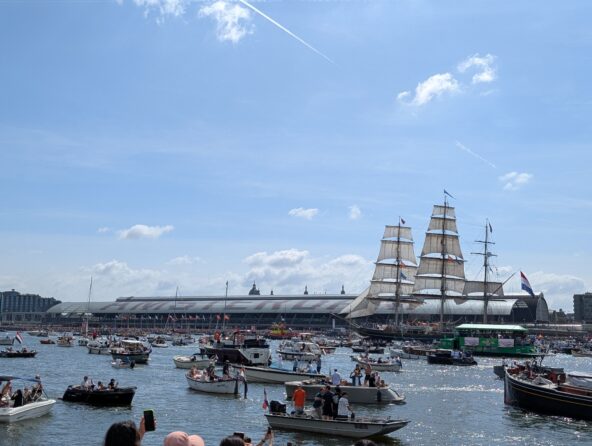
SAIL! 2025

We aren’t doing brain surgery here.  But we are tending to a sprained ankle of sorts, and if you don’t tend to it properly, the pain gets worse down the road.  Serving process in the Netherlands is subject to the strictures of the Hague Service Convention, regardless of which U.S. or Canadian venue is hearing the matter.

You’ve got three ways to go:

  1. Tap us on the shoulder for bespoke attention—and probably some amusing commentary to boot (see the upper right if you’re on a desktop, or way down below if you’re on a phone/tablet),
  2. Cruise over to the Hague Envoy platform at USM94.com to automate the completion of your forms in perhaps twenty minutes or so, or
  3. If you’re feeling froggy & would like to handle the whole thing yourself, keep reading.  This lays out the framework you’ll need.

Some background is in order, if you’re so inclined, before we cut to the chase.

  • The roadmap to the overall process—the recipe to our Secret Sauce.
  • The structure of the Convention itself is discussed in this four-part series.
  • And an absolutely critical note: the Hague Service Convention does not confer coercive effect on subpoenas.  Repeat after me—you can’t just SERVE a subpoena abroad.  At least, not if you want it to actually work.  Instead, you have to file a Hague Evidence Request.  Dramatically different from serving a summons or notice.

Now, for the chase scene (or… here’s how it’s done in The Netherlands):

Article 5 Service

  • Translate the documents. The Netherlands’ declaration to Article 5(3) does not require translation, and this is perfectly logical, given that the Dutch learn English non-stop beginning at the age of five (I have yet to meet a Dutchman who doesn’t speak English as well as I do).  Translate the documents anyway.  Even if the defendant speaks flawless English—and most of them do—omitting translated documents may prompt local officials (gerechtsdeurwaarders*) to refuse service.  If the gerechtsdeurwaarder is not familiar with the Art. 5(3) declaration, he/she may offer the defendant the opportunity to refuse service under an EU regulation.  Although this regulation does not apply to service of process from non-EU nations, the gerechtsdeurwaarder’s statement of non-service is dispositive, and requires a reboot of the whole procedure.
  • Fill out a USM-94. Be very careful about ensuring that it is complete and concise, and make sure that it is signed by a court official or an attorney.  If it is not, make sure that the person signing is commissioned by the court.
  • Send to the Central Authority, who will then instruct a gerechtsdeurwaarder to serve the documents.
  • Sit tight. It may take a while—likely 3 months from submission to return of proof.

Article 10 alternative methods

  • Mail service is available, but it’s a bad idea. If you do select this route, pay particular attention to the venue court’s rules about how mail service is initiated—in federal cases, adhere strictly to FRCP 4(f)(2)(C)(ii).
  • The Netherlands also allows direct access to a gerechtsdeurwaarder. This method avoids having to wait for processing by the Central Authority, often cutting wait time considerably and without significant additional cost.  My gerechtsdeurwaarder does not advise defendant’s about the inapplicable EU regulation, so we can usually serve without translation.

Pretty straightforward options in the Netherlands (noting that Holland is only a part of the Kingdom), whose declarations and Central Authority information can be found here.

Bonus practice tip… if you’re defense counsel, always question the validity of service effected on your overseas client.  The plaintiff may not have done it correctly.


* The gerechtsdeurwaarder is a specialized professional in the civil law system.  A qualified attorney, whose practice is limited to procedural matters on behalf of the court, the gerechtsdeurwaarder serves process in Dutch actions and is tasked with executing judgments.  A rough analog in common law systems:  a combination between a bailiff and a sheriff, but with the same level of training as a practicing attorney.  The gerechtsdeurwaarder’s counterpart in French-speaking jurisdictions: the huissier de justice.  In German-speaking areas: the deurwaarder (although, to be sure, this won’t help much, as Germany, Switzerland, and Austria all prohibit access to judicial officers for service requests).


[Author’s note:  I’ve had the incredible pleasure of visiting the Netherlands on several occasions—as a boy during my dad’s three-year tour of duty in Belgium with the U.S. Army, during an all-too brief whirlwind as a college student (no recreational herbs, if you can believe it), and in both 2016 & 2018 on side trips during a CLE group tour in Paris.  By the way, if you need CLE hours, holy socks, Batman.  Get them in Europe and justify the trip as a business expense.  You might even get to hear me lecture on the very topic of this column.]

We aren’t doing brain surgery here.  But we are tending to a sprained ankle of sorts, and if you don’t tend to it properly, the pain gets worse down the road, especially if the road is cobbled.  Italian roads?  Frequently cobbled and uneven.

Fortunately, though, serving process in Italy happens within the strictures of the Hague Service Convention, regardless of which U.S. or Canadian venue is hearing the matter, and that’s a good thing.

You’ve got three ways to go:

  1. Tap us on the shoulder for bespoke attention—and probably some amusing commentary to boot (see the upper right if you’re on a desktop, or way down below if you’re on a phone/tablet),
  2. Cruise over to the Hague Envoy platform at USM94.com to automate the completion of your forms in perhaps twenty minutes or so, or
  3. If you’re feeling froggy & would like to handle the whole thing yourself, keep reading.  This lays out the framework you’ll need.

Some background is in order, if you’re so inclined, before we cut to the chase.

  • The roadmap to the overall process—the recipe to our Secret Sauce.
  • The structure of the Convention itself is discussed in this four-part series.
  • And an absolutely critical note: the Hague Service Convention does not pertain to subpoenas.  Repeat after me—you can’t just SERVE a subpoena abroad.  At least, not if you want it to actually work.  Instead, you have to file a Hague Evidence Request.  Dramatically different from serving a summons or notice.

Now, for the chase scene.  Okay, so you’re not James Bond, but here’s how it’s done in Italy:

Article 5 Service

  • Translate the documents.  Italy’s declaration to Article 5(3) requires it.   [This is relatively new knowledge… until 2018, Italy’s declaration page on the Hague Conference website indicated that translation was not required.  It was advisable regardless, but the page has been updated and eliminates all question.]
  • Fill out a USM-94. Be very careful about ensuring that it is complete and concise, and make sure that it is signed by a court official or an attorney.  If it is not, make sure that the person signing is commissioned by the court.
  • Send to the Central Authority.
  • Sit tight. It may take a while—likely 4 months from submission to return of proof.  But although it seems like a bit of a wait, the Italians get the job done.
  • A word of warning– you may have to have the proof documents translated.  Sometimes the local authority who serves the documents will send the proof directly to the applicant (you) instead of to the Central Authority.  Result: service is still valid, but you have to have the paperwork translated into English.  (The Central Authority sends back a Hague Certificate, which is a bit like a Willy Wonka Golden Ticket

Article 10 alternative methods

  • Mail service is available, depending on where you are, but it’s a bad idea anyway. If you do select this route, pay particular attention to the venue court’s rules about how mail service is initiated—in federal cases, adhere strictly to FRCP 4(f)(2)(C)(ii).
  • Italy also allows access to an ufficiale giudiziario, the judicial official who often serves process in Italian actions.  But you have to hire Italian counsel to petition a local court for a service order.  This method avoids having to wait for processing by the Central Authority, but only saves a month or so—and costs a few thousand dollars more.  [This method will be changing in 2025 thanks to a newly enacted statute allowing Italian counsel to act as an ufficiale giudiziario, hopefully without the need for court involvement.  Stay tuned!]

Click here for a war story about service in Italy, with a twist.  Italy’s declarations and Central Authority information can be found here.

Bonus practice tip… if you’re defense counsel, always question the validity of service effected on your overseas client.  The plaintiff may not have done it correctly.


[Author’s note:  I’ve had the incredible pleasure of visiting Italy five times in the past decade—six if you fudge the math on that one time that I went up to Paris during a visit to Rome.  I’ve never thrown three coins into any fountain, and I’ve returned to Rome repeatedly.  My visits in 2015 and 2017 were with Peggy while she was staffing a CLE group tour program– we went back again in 2019 and in 2023.  By the way, if you need CLE hours, holy socks, Batman.  Get them in Europe and justify the trip as a business expense.  You might even get to hear me lecture on the very topic of this column.]

AP Venice
Peggy fell in love with Venice.

We are not building rockets here.  But we are building a ship, of sorts, and a leaky ship makes it tough to get your cargo to its destination.  To make it in Hong Kong, you also need a highly sophisticated motor scooter, and if the bad guys are coming after you with a helicopter, you want a legendary martial arts film star helping you out (no, I don’t mean Jackie Chan… just keep reading).

Serving process in Hong Kong is subject to the strictures of the Hague Service Convention, regardless of which U.S. or Canadian venue is hearing the matter.  Critical to note is that Hong Kong is very much a part of the People’s Republic of China, and for two decades has been considered a “Special Administrative Region” of the PRC.  For a century before that, it was a British colony, and its legal regime is still very British in nature… common law, solicitors, English-language pleadings & arguments, etc.  The PRC’s declarations to the Service Convention for Hong Kong really just continue the British Hague regime, rather than apply the rules for the remainder of mainland China.

You’ve got three ways to go:

  1. Tap us on the shoulder for bespoke attention—and probably some amusing commentary to boot (see the upper right if you’re on a desktop, or way down below if you’re on a phone/tablet),
  2. Cruise over to the Hague Envoy platform at USM94.com to automate the completion of your forms in perhaps twenty minutes or so, or
  3. If you’re feeling froggy & would like to handle the whole thing yourself, keep reading.  This lays out the framework you’ll need.

Some background is in order, if you’re so inclined, before we cut to the chase.

Now, for the chase scene.

Personally, I thought Wai Lin was way cooler than Bond. He couldn't have pulled this one off without her.
Personally, I thought Wai Lin was way cooler than Bond. He couldn’t have pulled this one off without her.

Here’s how service is effected in Hong Kong:

Article 5 Service

  • Before you do anything, sift through your pleadings and make sure that you haven’t put Hong Kong on an equal linguistic footing with the PRC.  Or even with New Jersey or Switzerland or Pakistan or… you get the picture.  Simply tack the letters “S.A.R.” (Special Administrative Region) or “(comma) China” after “Hong Kong,” and you’re solid.*  Calling it just Hong Kong, while naming other sovereign states in isolation, will cause headaches for the Hong Kong Central Authority, and they will reject your request as a matter of course.  I suspect that Beijing couldn’t care less, but the fellows in HK are a bit skittish about offending the mother ship.  You’d be silly to tell them they’re overreacting.  [Update, January, 2020:  It seems that now even exhibits must conform to the rule.  That presents a sticky problem.  See here for moreUpdate again, April, 2024: I can no longer suggest that Article 5 service is tenable in Hong Kong.  See here for why.]
  • I’m not kidding.  Go back and read that bullet again– or if your documents don’t comply with that, just skip down to Article 10 because it’s the only way to go without big problems.
  • Translate the documents. China’s Hong Kong declaration to Article 5(3) requires that documents be in Chinese or English.  So, game over, right?  We can pack up and go home?  Not so fast, counsel… make sure your defendant speaks English, because his U.S. Due Process rights follow him, in a sense.  Anybody sued in a U.S. court must be served in a language they understand, so if they don’t speak English, translation is still necessary.
  • Fill out a USM-94. Be very careful about ensuring that it is complete and concise, and make sure that it is signed by a court official or an attorney.  If it is not, make sure that the person signing is commissioned by the court.
  • Send to the Central Authority.
  • Sit tight. It may take a while—likely three or four months from submission to return of proof.

Article 10 alternative methods

  • Mail service is available, depending on where you are, but it’s a bad idea anyway.
  • Service via private agent is available to U.S. litigants under Article 10(b), and it costs more, but runs a whole lot more quickly and with significantly less fuss over linguistics.**  When I talk about it, I feel like “M” (007’s boss).  “Moneypenny, contact our man in Hong Kong.”  I like to think I’m more evolved than Bond’s chain of command, though.  Our woman in Hong Kong is lot like Wai Lin from Tomorrow Never Dies.

If this woman shows up at your door with an envelope, just take it from her and say "thank you, madam." She knows thirteen ways to put you in the hospital for a week, and all of them are better than James Bond can pull off.
If Michelle Yeoh shows up at your door with an envelope, just take it from her and say “thank you, ma’am.  Good day to you.”  She knows thirteen ways to put you in the hospital for a week without killing you. All of them hurt.

All of Hong Kong SAR’s declarations and Central Authority information can be found here.

Bonus practice tip… if you’re defense counsel, always question the validity of service effected on your overseas client.  The plaintiff may not have done it correctly.  Now, if Wai Lin served it, don’t argue.  Thirteen ways


* One exception: if Hong Kong is part of the name of a company, don’t sweat it for that instance.

** The “S.A.R.” distinction is still a good idea if you think you’ll have to enforce a judgment abroad.