
Nope.  We’re not building rockets here.  But we are building a ship of sorts, and a leaky vessel means the cargo may not make it to its destination.  When we talk about cargo ships, there’s a significant chance the name Hanjin is painted on the side.  It’s among the biggest shippers on the seven seas, and it gets its cargo to destination.  It’s also often the defendant in lawsuits, and serving the conglomerate at its Seoul headquarters requires adherence to some particular rules.

Serving process in the Republic of Korea is subject to the strictures of the Hague Service Convention, regardless of which U.S. or Canadian venue is hearing the matter.  (Don’t bother with the South or North distinction.  We really only deal with the south… unless there’s a very crazy saber rattling somewhere on the other side of the DMZ.  For our purposes, just “Korea” will do.)

You’ve got three ways to go:

  1. Tap us on the shoulder for bespoke attention—and probably some amusing commentary to boot (see the upper right if you’re on a desktop, or way down below if you’re on a phone/tablet),
  2. Cruise over to the Hague Envoy platform at USM94.com to automate the completion of your forms in perhaps twenty minutes or so, or
  3. If you’re feeling froggy & would like to handle the whole thing yourself, keep reading.  This lays out the framework you’ll need.

Some background is in order, if you’re so inclined, before we cut to the chase.

[Now, for the chase scene.]

Here’s how service is effected in Korea:

Article 5 Service

  • Translate the documents. Korea’s declaration to Article 5(3) suggests it and, although the defendant may speak flawless English, omitting translated documents will prompt the Central Authority to reject your request.  To be sure, they say a translation should be attached to the service documents… in the words of that shoe company in Oregon, just do it.  [On the flip side, a little practice tip… you’re going to have to translate the proof, because the Central Authority in Seoul doesn’t respond in English.  Whether service is successful or not.]
  • Fill out a USM-94. Be very careful about ensuring that it is complete and concise, and make sure that it is signed by a court official or an attorney.  If it is not, make sure that the person signing is commissioned by the court.
  • Send to the Central Authority.
  • Sit tight. It may take a while—likely 4-5 months from submission to return of proof.

Article 10 alternative methods

  • None.  Korea objects to all of them, so Article 5 is the single avenue to proper service.

That’s all there is to it in Korea.  There’s only one way to do it.  Iconic brands like Samsung, LG, Hyundai… if you’re suing any of them, this is the route to take.  Korea’s declarations and Central Authority information can be found here.


Bonus practice tip #1: if the idea is strategically sound, ask the defendant to waive service.  Note that I didn’t say accept— I said waiveThere’s a very important difference.

Bonus practice tip #2: if you’re defense counsel, always question the validity of service effected on your overseas client.  The plaintiff may not have done it correctly.


Not specifically Eric's jacket.
Not specifically Eric’s jacket.

For many Americans, our most lasting image of Korea is the final episode of M*A*S*H in 1983.  My most lasting image of Korea was a kid named Eric in the 4th grade.  Eric’s dad was a staff NCO like my dad, and had met Eric’s mom in her hometown outside Seoul.  My classes in those days looked like a UN conclave, but this guy really stood out– not because he was half Korean, but because he had this cool blue satin jacket with a dragon embroidered on the back and “KOREA” in big gold letters above it.  I was nine at the time, so that thing rocked.

Nope.  We’re not building rockets here.  But we are building a ship of sorts, and a leaky vessel means the cargo may not make it to its destination.  Serving process in Japan is subject to the strictures of the Hague Service Convention, regardless of which U.S. or Canadian venue is hearing the matter.

There’s only one valid way to serve in Japan, but you’ve got three ways to approach that method:

  1. Tap us on the shoulder for bespoke attention—and probably some amusing commentary to boot,
  2. Cruise over to the Hague Envoy platform at USM94.com to automate the completion of Request forms for your signature and dispatch in perhaps twenty minutes or so, or
  3. If you’re feeling froggy & would like to handle the whole thing yourself, keep reading.  This lays out the framework you’ll need.

Some background is in order, if you’re so inclined, before we cut to the chase.

  • The roadmap to the overall process—the recipe to our Secret Sauce (hint: there’s really no secret).
  • The structure of the Convention itself is discussed in this four-part series.
  • And an absolutely critical note: the Hague Service Convention does not confer coercive effect on subpoenas.  Repeat after me—you can’t just SERVE a subpoena abroad.  At least not if you want it to work. You have to file a Hague Evidence Request in most instances– or a Letter Rogatory in Japan, which isn’t part of the Evidence Convention.  Dramatically different from serving a summons or notice.

[Now, for the chase scene, from You Only Live Twice.]

Here’s how service is effected in Japan:

Article 5 Service

  • Translate the documents. Japan’s declaration to Article 5(3) requires it and, although the defendant may speak flawless English, omitting translated documents will prompt the Central Authority to reject your request.
  • Fill out a USM-94. Be very careful about ensuring that it is complete and concise, and make sure that it is signed by a court official or an attorney.  If it is not, make sure that the person signing is commissioned by the court.
  • Send to the Central Authority.
  • Sit tight. It may take a while—likely 6 months or more, from submission to return of proof.

Article 10 alternative methods

  • The Japanese object to Article 10 entirely, so there are no alternatives.  None.

That’s all there is to it in Japan.  There’s really only one way to do it, and… Japanese efficiency is a thing.  Iconic brands like Toyota, Honda, Sony, Mitsubishi, Canon, Fujitsu (maker of the greatest piece of office equipment ever!)… if you’re suing any of them, this is the route to take.

Japan’s declarations and Central Authority information can be found here.


Bonus practice tip #1: if the idea is strategically sound, ask the defendant to waive service.  Note that I didn’t say accept— I said waiveThere’s a very important difference.

Bonus practice tip #2: if you’re defense counsel, always question the validity of service effected on your overseas client.  The plaintiff may not have done it correctly.


When I was five years old, my dad (career Army, hoo ah) came home from work one day with a stack of records under his arm. 

  • What are those, Dad?
  • Those are Berlitz records, son.
  • What’s burr-BITZ?
  • Berlitz.  They’re going to help us learn to speak Japanese.
  • What’s Japanese? Is that like mayonnaise?  (I was five.)
  • No, it’s the language they speak in Japan. We’re moving there.

So off we went along a very short-lived linguistic journey.  Ko-NEE-chee-wah.  Are-ee-GAH-toe. 

Two weeks later, another stack of Berlitz records came home under the old man’s arm (he was 25 himself, so “old” is relative).  This time, they were French, because his orders got changed.  Instead of Camp Zama, we went to Allied Headquarters in Europe, so Shōgun ended up being my first exposure to Japanese culture.  It aired back in the states right after we got home from Belgium.  Oh, the irony.

One of my great regrets is that I haven’t been to the Land of the Rising Sun. 

Yet.

Yeah, we never got there.

I say all the time that we’re not building rockets here.  But we are building a JetSki of sorts, and a sputtering JetSki means you’re not going to finish your jungle tour in time to make it back for the foam party at Señor Frog’s.  Serving process in Mexico is subject to the strictures of the Hague Service Convention, regardless of which U.S. or Canadian venue is hearing the matter.

You’ve got three ways to go:

  1. Tap us on the shoulder for bespoke attention—and probably some amusing commentary to boot (see the upper right if you’re on a desktop, or way down below if you’re on a phone/tablet),
  2. Cruise over to the Hague Envoy platform at USM94.com to automate the completion of your forms in perhaps twenty minutes or so, or
  3. If you’re feeling froggy & would like to handle the whole thing yourself, keep reading.  This lays out the framework you’ll need.

Some background is in order, if you’re so inclined, before we cut to the chase.

Now, for the chase scene.  And now that you’ve had your James Bond fix, here’s how service of process is done in Mexico:

Article 5 Service

  • Translate the documents. Mexico’s declaration to Article 5(3) requires it and, although the defendant may speak flawless English, omitting translated documents will prompt the Central Authority to reject your request.*
  • Fill out a USM-94. Be very careful about ensuring that it is complete and concise, and make sure that it is signed by a court official or an attorney.  If it is not, make sure that the person signing is commissioned by the court.
  • Send to the Central Authority.  Although the treaty only requires submission of two copies, Mexico insists on triplicate submissions.  (You can be happy or you can be right, so I don’t make a big deal of it!)
  • Sit tight. It may take a while—likely 18 months, perhaps two years or even more, from submission to return of proof.  The judge is just going to have to accept that fact, because there is no appropriate alternative.  To be sure, that time frame is not fatal to your case– 4(m) is your friend.

Article 10 alternative methods

  • Forget them, because Mexico objects to them all. Article 5 is it.  Acabado, abogado.

Seriously—that’s all there is to it in Mexico, but don’t get excited.  Sure, the method is straightforward and simple, but actually making it happen is anything but smooth.  The real problem with service in Mexico is that it takes an interminably long time, and in many cases, local authorities are decidedly less than motivated to act against large local entities, so service on the local factory boss may not happen at all.

Mexico’s declarations and Central Authority information can be found here.


Bonus practice tip #1: if the idea is strategically sound, ask the defendant to waive service.  Note that I didn’t say accept— I said waiveThere’s a very important difference.

Bonus practice tip #2: if you’re defense counsel, always question the validity of service effected on your overseas client.  The plaintiff may not have done it correctly.


* The Mexican Central Authority hands service requests off to courts in the communities where defendants are located, and the judges execute requests according to local practice.  Until very recently, those judges enforced a rule that required all translations submitted to their courts be performed by court-certified perito translators.  Such translators are few and far between—a very tight guild monopoly—driving up the cost of translation despite the position of the Hague Conference that no such requirement was appropriate under the Service Convention.  Apparently, the Central Authority now communicates to judges that lack of a court-certified perito translation is not sufficient grounds for rejecting a request.  This does not mean, however, that the rejection would not be issued anyway, in which case the Central Authority would bounce the request to the judge again… back & forth until an understanding is reached.  All the while, the U.S. lawyer and his/her client sit and wait.


[Author’s Note:  My only visit to Mexico was on a spring break trip to Cancun in the late 1990s… and I was the chaperone.  By that time in my life, foam parties and booze cruises were not my thing, but I did get to climb the pyramid at Chichén Itzá and eat the best fish tacos anywhere in the solar system.  It took a fair amount of begging to get to see real Mexican life, because it cannot be found in the resort areas.]

[Author’s note:  my first of many visits to the Grand Duchy of Luxembourg was at the age of five or six, with my parents.  In college, I had a chance to visit on my own, and fell in love with the place all over again, concluding that Lux City is Europe’s best-kept secret.  Really a neat corner of the world, and highly sophisticated—especially in the legal and financial industries.]

Serving process in Luxembourg is subject to the strictures of the Hague Service Convention, regardless of which U.S. or Canadian venue is hearing the matter.

You’ve got three ways to go:

  1. Tap us on the shoulder for bespoke attention—and probably some amusing commentary to boot (see the upper right if you’re on a desktop, or way down below if you’re on a phone/tablet),
  2. Cruise over to the Hague Envoy platform at USM94.com to automate the completion of your forms in perhaps twenty minutes or so, or
  3. If you’re feeling froggy & would like to handle the whole thing yourself, keep reading.  This lays out the framework you’ll need.

Some background is in order, if you’re so inclined, before we cut to the chase.

Now, for the chase scene (or more accurately, here’s how it’s done in Luxembourg):

Article 5 Service

  • Translate the documents. Luxembourg’s declaration to Article 5(3) requires it and, although the defendant may speak flawless English, omitting translated documents will prompt the Central Authority to reject your request.  Fortunately, the Authority will accept translations into either French or German, so savings can occasionally be realized by chance.  If a Luxembourg party’s co-defendant is in France, southern Belgium, or western Switzerland, only one translation is necessary.  Likewise with a co-defendant in Germany or eastern Switzerland (although the preferred language is still French).
  • Fill out a USM-94. Be very careful about ensuring that it is complete and concise, and make sure that it is signed by a court official or an attorney.  If it is not, make sure that the person signing is commissioned by the court.
  • Send to the Central Authority.
  • Sit tight. It will likely 2 months from submission to receive proof of service.

Article 10 alternative methods

  • Mail service is technically available, but it’s a bad idea anyway.
  • Luxembourg also allows direct access to a huissier de justice,* the judicial officer who serves process in local actions and Article 5 requests anyway.  In my experience, this isn’t necessary because the Central Authority is relatively quick to begin with.

Pretty straightforward options in this tiny dukedom, but choosing the right one can be tricky.  Luxembourg’s declarations and Central Authority information can be found here.

Bonus practice tip… if you’re defense counsel, always question the validity of service effected on your overseas client.  The plaintiff may not have done it correctly.


* The huissier is a specialized professional in the civil law system.  A qualified attorney, whose practice is limited to procedural matters on behalf of the court, the huissier not only serves process, but is also tasked with executing judgments.  A rough analog in common law systems:  a combination between a bailiff and a sheriff, but with the same level of training as a practicing attorney.  The huissier’s counterpart in Dutch-speaking jurisidctions: the gerechtsdeurwaarder.  In German-speaking areas: the deurwaarder (although, to be sure, this won’t help much, as Germany, Switzerland, and Austria all prohibit access to judicial officers for service requests).

[Author’s Note: my family & I spent three years in Belgium when I was a young boy.  It was the launchpad for my career as an international lawyer, even though it took some thirty more years to develop.  Quite logically, this tiny kingdom holds a very special place in my heart.]

Serving process in Belgium is subject to the strictures of the Hague Service Convention, regardless of which U.S. or Canadian venue is hearing the matter.

You’ve got three ways to go:

  1. Tap us on the shoulder for bespoke attention—and probably some amusing commentary to boot (see the upper right if you’re on a desktop, or way down below if you’re on a phone/tablet),
  2. Cruise over to the Hague Envoy platform at USM94.com to automate the completion of your forms in perhaps twenty minutes or so, or
  3. If you’re feeling froggy & would like to handle the whole thing yourself, keep reading.  This lays out the framework you’ll need.

Some background is in order, if you’re so inclined, before we cut to the chase.

Now, for the chase scene.  Here’s how it’s done in Belgium:

Article 5 Service

  • Translate the documents. Belgium’s declaration to Article 5(3) used to allow the Central Authority to accept untranslated documents.  No longer.  It’s now a requirement (updated 2020).  But that isn’t the end of the analysis—depending on the defendant’s location, different languages are necessary.*
  • Fill out a USM-94. Be very careful about ensuring that it is complete and concise, and make sure that it is signed by a court official or an attorney.  If it is not, make sure that the person signing is commissioned by the court.
  • Send to the Central Authority, who will then instruct a huissier de justice (in the francophone south) or a gerechtsdeurwaarder (in the Flemish/Dutch-speaking north) to serve.
  • Sit tight. It may take a while—perhaps 4 months from submission to return of proof, depending on the defendant’s locality. 

Article 10 alternative methods

  • Mail service is available, depending on where you are, but it’s a bad idea anyway. If you do select this route, pay particular attention to the venue court’s rules about how mail service is initiated—in federal cases, adhere strictly to FRCP 4(f)(2)(C)(ii).
  • Belgium also allows direct access to a huissier de justice or gerechtsdeurwaarder,** the judicial officer who serves process in local actions and Article 5 requests. This method avoids having to wait for processing by the Central Authority, often cutting wait time by a couple of months, but finding a huissier or gerechtsdeurwaarder without speaking French or Flemish (respectively) can be a challenge.

Pretty straightforward options in this tiny kingdom (which is my favorite country on the continent, and has been since I was a young kid).  Belgium’s declarations and Central Authority information can be found here.

Bonus practice tip… if you’re defense counsel, always question the validity of service effected on your overseas client.  The plaintiff may not have done it correctly.


* In the north, translate into Dutch or, even more preferable, Flemish (a Dutch dialect).  In the south—including the city of Brussels—translate into French.  And in the extreme east, a few communities still use German as the local language.  Google the name of the locality to find out which language is preferred.  A handy, cost-saving practice tip:  if a Belgian party has co-defendants in France, Switzerland, Luxembourg, or the Netherlands, you might be able to double-dip your translations.

** The bailiff, for lack of a better term, is a specialized professional in the civil law system.  A qualified attorney, whose practice is limited to procedural matters on behalf of the court, the bailiff not only serves process, but is also tasked with executing judgments.  A rough analog in common law systems:  really a combination hybrid of our bailiffs and sheriffs, but with the same level of training as a practicing attorney.  In French-speaking jurisdictions, s/he is called a huissier de justice.  In Dutch-speaking jurisdictions, a gerechtsdeurwaarder,  and in German-speaking areas, a deurwaarder.   (Although, to be sure, this won’t help much in Germany, Switzerland, or Austria, as those countries all prohibit access to judicial officers for service requests).

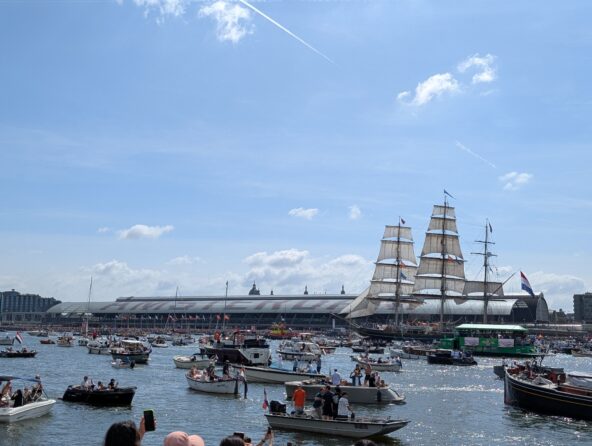
SAIL! 2025

We aren’t doing brain surgery here.  But we are tending to a sprained ankle of sorts, and if you don’t tend to it properly, the pain gets worse down the road.  Serving process in the Netherlands is subject to the strictures of the Hague Service Convention, regardless of which U.S. or Canadian venue is hearing the matter.

You’ve got three ways to go:

  1. Tap us on the shoulder for bespoke attention—and probably some amusing commentary to boot (see the upper right if you’re on a desktop, or way down below if you’re on a phone/tablet),
  2. Cruise over to the Hague Envoy platform at USM94.com to automate the completion of your forms in perhaps twenty minutes or so, or
  3. If you’re feeling froggy & would like to handle the whole thing yourself, keep reading.  This lays out the framework you’ll need.

Some background is in order, if you’re so inclined, before we cut to the chase.

  • The roadmap to the overall process—the recipe to our Secret Sauce.
  • The structure of the Convention itself is discussed in this four-part series.
  • And an absolutely critical note: the Hague Service Convention does not confer coercive effect on subpoenas.  Repeat after me—you can’t just SERVE a subpoena abroad.  At least, not if you want it to actually work.  Instead, you have to file a Hague Evidence Request.  Dramatically different from serving a summons or notice.

Now, for the chase scene (or… here’s how it’s done in The Netherlands):

Article 5 Service

  • Translate the documents. The Netherlands’ declaration to Article 5(3) does not require translation, and this is perfectly logical, given that the Dutch learn English non-stop beginning at the age of five (I have yet to meet a Dutchman who doesn’t speak English as well as I do).  Translate the documents anyway.  Even if the defendant speaks flawless English—and most of them do—omitting translated documents may prompt local officials (gerechtsdeurwaarders*) to refuse service.  If the gerechtsdeurwaarder is not familiar with the Art. 5(3) declaration, he/she may offer the defendant the opportunity to refuse service under an EU regulation.  Although this regulation does not apply to service of process from non-EU nations, the gerechtsdeurwaarder’s statement of non-service is dispositive, and requires a reboot of the whole procedure.
  • Fill out a USM-94. Be very careful about ensuring that it is complete and concise, and make sure that it is signed by a court official or an attorney.  If it is not, make sure that the person signing is commissioned by the court.
  • Send to the Central Authority, who will then instruct a gerechtsdeurwaarder to serve the documents.
  • Sit tight. It may take a while—likely 3 months from submission to return of proof.

Article 10 alternative methods

  • Mail service is available, but it’s a bad idea. If you do select this route, pay particular attention to the venue court’s rules about how mail service is initiated—in federal cases, adhere strictly to FRCP 4(f)(2)(C)(ii).
  • The Netherlands also allows direct access to a gerechtsdeurwaarder. This method avoids having to wait for processing by the Central Authority, often cutting wait time considerably and without significant additional cost.  My gerechtsdeurwaarder does not advise defendant’s about the inapplicable EU regulation, so we can usually serve without translation.

Pretty straightforward options in the Netherlands (noting that Holland is only a part of the Kingdom), whose declarations and Central Authority information can be found here.

Bonus practice tip… if you’re defense counsel, always question the validity of service effected on your overseas client.  The plaintiff may not have done it correctly.


* The gerechtsdeurwaarder is a specialized professional in the civil law system.  A qualified attorney, whose practice is limited to procedural matters on behalf of the court, the gerechtsdeurwaarder serves process in Dutch actions and is tasked with executing judgments.  A rough analog in common law systems:  a combination between a bailiff and a sheriff, but with the same level of training as a practicing attorney.  The gerechtsdeurwaarder’s counterpart in French-speaking jurisdictions: the huissier de justice.  In German-speaking areas: the deurwaarder (although, to be sure, this won’t help much, as Germany, Switzerland, and Austria all prohibit access to judicial officers for service requests).


[Author’s note:  I’ve had the incredible pleasure of visiting the Netherlands on several occasions—as a boy during my dad’s three-year tour of duty in Belgium with the U.S. Army, during an all-too brief whirlwind as a college student (no recreational herbs, if you can believe it), and in both 2016 & 2018 on side trips during a CLE group tour in Paris.  By the way, if you need CLE hours, holy socks, Batman.  Get them in Europe and justify the trip as a business expense.  You might even get to hear me lecture on the very topic of this column.]

We aren’t doing brain surgery here.  But we are tending to a sprained ankle of sorts, and if you don’t tend to it properly, the pain gets worse down the road, especially if the road is cobbled.  Italian roads?  Frequently cobbled and uneven.

Fortunately, though, serving process in Italy happens within the strictures of the Hague Service Convention, regardless of which U.S. or Canadian venue is hearing the matter, and that’s a good thing.

You’ve got three ways to go:

  1. Tap us on the shoulder for bespoke attention—and probably some amusing commentary to boot (see the upper right if you’re on a desktop, or way down below if you’re on a phone/tablet),
  2. Cruise over to the Hague Envoy platform at USM94.com to automate the completion of your forms in perhaps twenty minutes or so, or
  3. If you’re feeling froggy & would like to handle the whole thing yourself, keep reading.  This lays out the framework you’ll need.

Some background is in order, if you’re so inclined, before we cut to the chase.

  • The roadmap to the overall process—the recipe to our Secret Sauce.
  • The structure of the Convention itself is discussed in this four-part series.
  • And an absolutely critical note: the Hague Service Convention does not pertain to subpoenas.  Repeat after me—you can’t just SERVE a subpoena abroad.  At least, not if you want it to actually work.  Instead, you have to file a Hague Evidence Request.  Dramatically different from serving a summons or notice.

Now, for the chase scene.  Okay, so you’re not James Bond, but here’s how it’s done in Italy:

Article 5 Service

  • Translate the documents.  Italy’s declaration to Article 5(3) requires it.   [This is relatively new knowledge… until 2018, Italy’s declaration page on the Hague Conference website indicated that translation was not required.  It was advisable regardless, but the page has been updated and eliminates all question.]
  • Fill out a USM-94. Be very careful about ensuring that it is complete and concise, and make sure that it is signed by a court official or an attorney.  If it is not, make sure that the person signing is commissioned by the court.
  • Send to the Central Authority.
  • Sit tight. It may take a while—likely 4 months from submission to return of proof.  But although it seems like a bit of a wait, the Italians get the job done.
  • A word of warning– you may have to have the proof documents translated.  Sometimes the local authority who serves the documents will send the proof directly to the applicant (you) instead of to the Central Authority.  Result: service is still valid, but you have to have the paperwork translated into English.  (The Central Authority sends back a Hague Certificate, which is a bit like a Willy Wonka Golden Ticket

Article 10 alternative methods

  • Mail service is available, depending on where you are, but it’s a bad idea anyway. If you do select this route, pay particular attention to the venue court’s rules about how mail service is initiated—in federal cases, adhere strictly to FRCP 4(f)(2)(C)(ii).
  • Italy also allows access to an ufficiale giudiziario, the judicial official who often serves process in Italian actions.  But you have to hire Italian counsel to petition a local court for a service order.  This method avoids having to wait for processing by the Central Authority, but only saves a month or so—and costs a few thousand dollars more.  [This method will be changing in 2025 thanks to a newly enacted statute allowing Italian counsel to act as an ufficiale giudiziario, hopefully without the need for court involvement.  Stay tuned!]

Click here for a war story about service in Italy, with a twist.  Italy’s declarations and Central Authority information can be found here.

Bonus practice tip… if you’re defense counsel, always question the validity of service effected on your overseas client.  The plaintiff may not have done it correctly.


[Author’s note:  I’ve had the incredible pleasure of visiting Italy five times in the past decade—six if you fudge the math on that one time that I went up to Paris during a visit to Rome.  I’ve never thrown three coins into any fountain, and I’ve returned to Rome repeatedly.  My visits in 2015 and 2017 were with Peggy while she was staffing a CLE group tour program– we went back again in 2019 and in 2023.  By the way, if you need CLE hours, holy socks, Batman.  Get them in Europe and justify the trip as a business expense.  You might even get to hear me lecture on the very topic of this column.]

AP Venice
Peggy fell in love with Venice.

We are not building rockets here.  But we are building a ship, of sorts, and a leaky ship makes it tough to get your cargo to its destination.  To make it in Hong Kong, you also need a highly sophisticated motor scooter, and if the bad guys are coming after you with a helicopter, you want a legendary martial arts film star helping you out (no, I don’t mean Jackie Chan… just keep reading).

Serving process in Hong Kong is subject to the strictures of the Hague Service Convention, regardless of which U.S. or Canadian venue is hearing the matter.  Critical to note is that Hong Kong is very much a part of the People’s Republic of China, and for two decades has been considered a “Special Administrative Region” of the PRC.  For a century before that, it was a British colony, and its legal regime is still very British in nature… common law, solicitors, English-language pleadings & arguments, etc.  The PRC’s declarations to the Service Convention for Hong Kong really just continue the British Hague regime, rather than apply the rules for the remainder of mainland China.

You’ve got three ways to go:

  1. Tap us on the shoulder for bespoke attention—and probably some amusing commentary to boot (see the upper right if you’re on a desktop, or way down below if you’re on a phone/tablet),
  2. Cruise over to the Hague Envoy platform at USM94.com to automate the completion of your forms in perhaps twenty minutes or so, or
  3. If you’re feeling froggy & would like to handle the whole thing yourself, keep reading.  This lays out the framework you’ll need.

Some background is in order, if you’re so inclined, before we cut to the chase.

Now, for the chase scene.

Personally, I thought Wai Lin was way cooler than Bond. He couldn't have pulled this one off without her.
Personally, I thought Wai Lin was way cooler than Bond. He couldn’t have pulled this one off without her.

Here’s how service is effected in Hong Kong:

Article 5 Service

  • Before you do anything, sift through your pleadings and make sure that you haven’t put Hong Kong on an equal linguistic footing with the PRC.  Or even with New Jersey or Switzerland or Pakistan or… you get the picture.  Simply tack the letters “S.A.R.” (Special Administrative Region) or “(comma) China” after “Hong Kong,” and you’re solid.*  Calling it just Hong Kong, while naming other sovereign states in isolation, will cause headaches for the Hong Kong Central Authority, and they will reject your request as a matter of course.  I suspect that Beijing couldn’t care less, but the fellows in HK are a bit skittish about offending the mother ship.  You’d be silly to tell them they’re overreacting.  [Update, January, 2020:  It seems that now even exhibits must conform to the rule.  That presents a sticky problem.  See here for moreUpdate again, April, 2024: I can no longer suggest that Article 5 service is tenable in Hong Kong.  See here for why.]
  • I’m not kidding.  Go back and read that bullet again– or if your documents don’t comply with that, just skip down to Article 10 because it’s the only way to go without big problems.
  • Translate the documents. China’s Hong Kong declaration to Article 5(3) requires that documents be in Chinese or English.  So, game over, right?  We can pack up and go home?  Not so fast, counsel… make sure your defendant speaks English, because his U.S. Due Process rights follow him, in a sense.  Anybody sued in a U.S. court must be served in a language they understand, so if they don’t speak English, translation is still necessary.
  • Fill out a USM-94. Be very careful about ensuring that it is complete and concise, and make sure that it is signed by a court official or an attorney.  If it is not, make sure that the person signing is commissioned by the court.
  • Send to the Central Authority.
  • Sit tight. It may take a while—likely three or four months from submission to return of proof.

Article 10 alternative methods

  • Mail service is available, depending on where you are, but it’s a bad idea anyway.
  • Service via private agent is available to U.S. litigants under Article 10(b), and it costs more, but runs a whole lot more quickly and with significantly less fuss over linguistics.**  When I talk about it, I feel like “M” (007’s boss).  “Moneypenny, contact our man in Hong Kong.”  I like to think I’m more evolved than Bond’s chain of command, though.  Our woman in Hong Kong is lot like Wai Lin from Tomorrow Never Dies.

If this woman shows up at your door with an envelope, just take it from her and say "thank you, madam." She knows thirteen ways to put you in the hospital for a week, and all of them are better than James Bond can pull off.
If Michelle Yeoh shows up at your door with an envelope, just take it from her and say “thank you, ma’am.  Good day to you.”  She knows thirteen ways to put you in the hospital for a week without killing you. All of them hurt.

All of Hong Kong SAR’s declarations and Central Authority information can be found here.

Bonus practice tip… if you’re defense counsel, always question the validity of service effected on your overseas client.  The plaintiff may not have done it correctly.  Now, if Wai Lin served it, don’t argue.  Thirteen ways


* One exception: if Hong Kong is part of the name of a company, don’t sweat it for that instance.

** The “S.A.R.” distinction is still a good idea if you think you’ll have to enforce a judgment abroad.

(Author’s Note, March 2026:  A whole bunch of litigators have successfully petitioned U.S. courts for orders to serve in China electronically pursuant to Rule 4(f)(3).  This is a horrible, terrible, very very bad idea.  Why?  Because it conflicts violently with the Hague Service Convention.  Don’t even bother, lest you set yourself up for a benchslap on appeal.  Two years ago I promised that it would happen, the 2d Circuit just did it, and the 7th is about to do it.)

I say all the time that we aren’t building rockets when serving process abroad.  For the most part, that’s correct… until it comes time to sue a Chinese party. As a general suggestion for anybody about to embark on that journey, I recommend skimming the China Law Blog, the authors of which have an unparalleled feel for the intricacies of China law.

If you do proceed with a suit, know that serving process in China is subject to the strictures of the Hague Service Convention, regardless of which U.S. or Canadian court is hearing the matter.  But it isn’t so simple as the procedure outlined below might lead you to believe; geography matters.  If your defendant is in Hong Kong, your Hague options are more varied than in the rest of the PRC (so a more complex decision lies before you), but considerably faster, easier, and more likely to lead to an enforceable judgment.  For Hong Kong, see here, because the Hague regime there is more British than Chinese.

On the mainland, you’ve got three ways to go:

  1. Tap us on the shoulder for bespoke attention—and probably some amusing commentary to boot (see the upper right if you’re on a desktop, or way down below if you’re on a phone/tablet),
  2. Cruise over to the Hague Envoy platform at USM94.com to automate the completion of your forms in perhaps twenty minutes or so, or
  3. If you’re feeling froggy & would like to handle the whole thing yourself, keep reading.  This lays out the framework you’ll need.

Some background is in order, if you’re so inclined, before we cut to the chase.

  • The roadmap to the overall process—the recipe to our Secret Sauce.
  • The structure of the Convention itself is discussed in this four-part series.
  • And an absolutely critical note: the Hague Service Convention does not confer coercive effect on subpoenas.  Repeat after me—you can’t just SERVE a subpoena abroad.  At least, not if you want it to actually work.  You have to file a Hague Evidence Request.  Dramatically different from serving a summons or notice.  But don’t get overly excited… Evidence Requests to China are usually a massive waste of time.
  • A bit of advance homework is necessary if you truly want to serve in China.  See here for a bit on the need for corporate research— very straightforward due diligence stuff.

Now, for the chase scene.

Personally, I thought Wai Lin was way cooler than Bond. He couldn't have pulled this one off without her.
Personally, I thought Wai Lin was way cooler than Bond. He couldn’t have pulled this one off without her.

Here’s how it’s done in the People’s Republic of China:

Article 5 Service

  • Translate the documents. China’s declaration to Article 5(3) requires it and, although the defendant may speak flawless English, omitting translated documents will prompt the Central Authority to reject your request.  And for crying out loud, get the right written form of Chinese, which is simplified.  
  • No, Mandarin is not what I mean.  Yes, the thing will be in the Mandarin dialect, sort of, but you need simplified written Chinese.  If your translation provider doesn’t know what that means, find a different translation provider.
  • If the defendant is a company, hire an investigator to ascertain the appropriate address for service. It may not appear anywhere in the documents you’ve exchanged already, and if you flub the address, the Central Authority can reject your request.  Or the local officials can reject your request.  Or the guy delivering the documents can be very slipshod about the way he does it.  In any of these circumstances, no dice.  For more, see Chinese company names, flawed addresses, and the high likelihood of Hague Service failure.
  • If it’s a U.S. action, wire $95 to the Central Authority.  The Convention arguably prohibits the assessment of fees, but we charge $95, so China returns the favor on a reciprocal basis.  (Unlike Russia, which rejects U.S. requests as a matter of course.  It’s retaliation, no question, but I happen to think they’re right.  And I hate agreeing with the Russians on anything.)
  • Fill out a USM-94. Be very careful about ensuring that it is complete and concise, and make sure that it is signed by a court official or an attorney.  If it is not, make sure that the person signing is commissioned by the court.
  • Send to the Central Authority.
  • Sit tight. It may take a while—likely 18 months from submission to return of proof, if not more.  To be sure, that time frame is not fatal to your case– 4(m) is your friend.

Article 10 alternative methods

  • They simply aren’t available, because China objects to them all. Article 5 is the only way it can be done.

Seriously—that’s all there is to it in China.  The method is straightforward; it’s a matter of a simple procedure with complicated implementation.  A tip worth noting is that China assesses a $95 fee for execution of service requests from the U.S.  This runs specifically counter to the “no fees to execute a service request” clause of Article 12, but they only do it to us because we do it to everybody.  It’s a better shake than the Russians give us, to be sure.

China’s declarations and Central Authority information can be found here.


Bonus practice tip #1: if the idea is strategically sound, ask the defendant to waive service.  Note that I didn’t say accept— I said waiveThere’s a very important difference.

Bonus practice tip #2: if you’re defense counsel, always question the validity of service effected on your overseas client.  The plaintiff may not have done it correctly.

The best practice tip of all:  call Dan Harris.*  No, really.  If your defendant doesn’t have assets in a country that is willing to enforce a U.S. judgment, you’re likely wasting time suing here.  Dan and his China lawyers can advise you on a strategy to litigate in the PRC.

UPDATE, May 14, 2018: a couple of important additional issues are discussed on a new post here.

And another UPDATE, September 5, 2019: another development discussed here.


* The publisher of the China Law Blog, Dan has been an invaluable guide to me as I’ve launched my own practice and this esoteric little blog.  Anybody who does business in the Far East should follow his writing religiously, and any lawyer who wants to see how blogging is done should do likewise.  [He also knows where to find the best Chinese food in Seattle.  No—not that anglicized stuff they make for the gringos.  I’m talking a crowded hole-in-the-wall type of place where we’re the only white guys in the room.]

Trafalgar Square, London.

We aren’t building rockets here.  But we are building a ship of sorts, and a leaky vessel means the cargo may not make it to its destination.  Serving process in England & Wales is subject to the strictures of the Hague Service Convention, regardless of which U.S. or Canadian venue is hearing the matter.  To be sure, service in Scotland and in Northern Ireland are handled differently, even though the United Kingdom as a whole signed onto the treaty (similarly, Canada has different methods for service depending on jurisdiction, as does the Republic of Ireland).

You’ve got three ways to go:

  1. Tap us on the shoulder for bespoke attention—and probably some amusing commentary to boot (see the upper right if you’re on a desktop, or way down below if you’re on a phone/tablet),
  2. Cruise over to the Hague Envoy platform at USM94.com to automate the completion of your forms in perhaps twenty minutes or so, or
  3. If you’re feeling froggy & would like to handle the whole thing yourself, keep reading.  This lays out the framework you’ll need.

Some background is in order, if you’re so inclined, before we cut to the chase.

  • The roadmap to the overall process—the recipe to our Secret Sauce.
  • The structure of the Convention itself is discussed in this four-part series.
  • And an absolutely critical note: the Hague Service Convention does not confer coercive effect on subpoenas.  Repeat after me—you can’t just SERVE a subpoena abroad.  At least not if you want it to work. You have to file a Hague Evidence Request.  Dramatically different from serving a summons or notice.

Now, for the chase scene.

top gear

No, not a chase involving those guys.  They aren’t even on the BBC anymore.

But they are on Amazon, so if they crash into your house while taping a new show… here’s how service is effected in England & Wales:

Article 5 Service

  • Translate the documents. The UK’s declaration to Article 5(3) requires that documents be in English.  Game over, right?  Pack up and go home?  Not so fast, counsel… make sure your defendant speaks English, because his U.S. Due Process rights follow him, in a sense.  Anybody sued in a U.S. court must be served in a language they understand, so if they don’t speak English, translation is still necessary.
  • Fill out a USM-94. Be very careful about ensuring that it is complete and concise, and make sure that it is signed by a court official or an attorney.  If it is not, make sure that the person signing is commissioned by the court.
  • Send to the Central Authority.
  • Sit tight. It may take a while—likely four or five months (maybe more) from submission to return of proof.
  • If your defendant is an individual, there is a significant chance that your Article 5 request will fail. The English Central Authority uses Royal Mail to carry service of process, and if the defendant doesn’t sign for the delivery… no dice.  You get a very pleasant notice from London inviting you to try again.

Article 10 alternative methods

  • Mail service is available, but it’s a bad idea anyway.
  • Service via private agent (process server) is available to U.S. litigants under Article 10(b). This is the only truly viable option for serving individual defendants in England & Wales, but still the better method for serving entities, too.   Either way—and this is absolutely critical—make sure to have the process server instructed by a solicitor, or the attempt to serve is ineffective, as it violates the UK’s position on Article 10.

The UK’s declarations and Central Authority information can be found here.

Bonus practice tip… if you’re defense counsel, always question the validity of service effected on your overseas client.  The plaintiff may not have done it correctly.


A bit on Wales… I finally got to visit the place this summer during a CLE conference in England.  [Each summer, my alma mater, UMKC, hosts a program at Oxford University.  Cardiff is a very short train ride away.]

Inside Cardiff Castle. The Welsh are very proud of being Welsh.